


An initiative by the Pan American Health Organization (PAHO) and the Evandro Chagas Institute aimed to enhance professionals’ routines and strengthen virus surveillance efforts across the Americas.
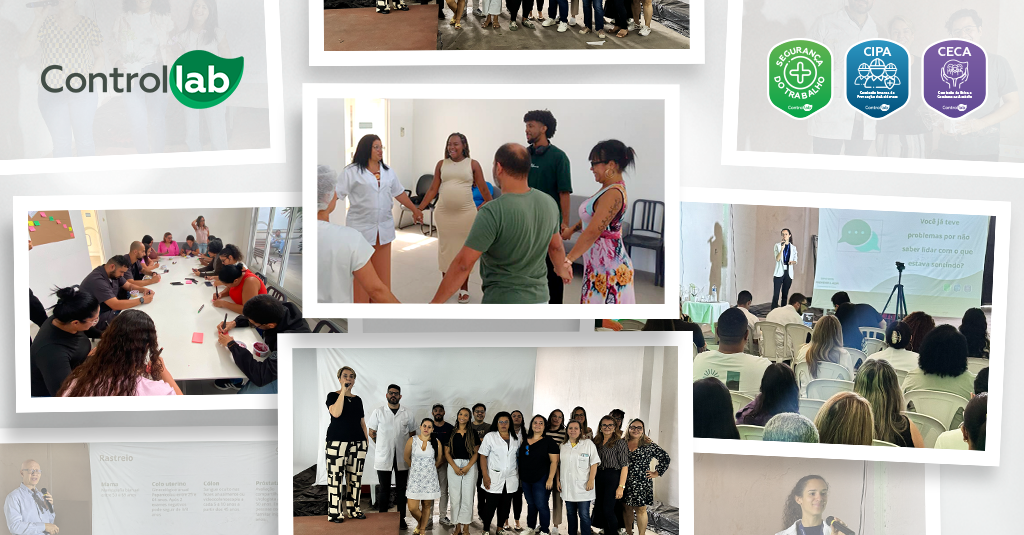
The Pan American Health Organization (PAHO) and the Evandro Chagas Institute (IEC), a science and technology institution under the Secretariat for Health Surveillance and Environment (SVSA) of the Ministry of Health (Brazil), held the workshop “Serological and Molecular Detection of Oropouche Virus (OROV) Infection” in September and October 2024.
The initiative arose from the need to strengthen virus surveillance efforts across the Americas and was conducted at the Arbovirology and Hemorrhagic Fevers Section (SEARB), which serves as a National Reference Laboratory and a Collaborating Center for PAHO and the World Health Organization (WHO) for emerging and re-emerging arboviruses and other viral zoonoses.
Professional development and benefits for public health
According to PAHO and IEC, laboratory diagnosis of OROV infection is essential for case confirmation and the qualification of surveillance data. The expectation is that, following the workshop, professionals will apply the knowledge gained regarding OROV diagnosis in both molecular and serological routine diagnostics, in order to strengthen the surveillance system. This way, it will be possible to improve the timely detection of outbreaks, monitor cases, and guide evidence-based decision-making.
Controllab and its contribution to the workshop
Attuned to the needs of the diagnostic sector and recognized for pioneering initiatives that ensure reliability in analytical routines, Controllab, the first company to provide the Proficiency Testing for Molecular Biology of the Oropouche Virus, sent control material samples for the training of professionals.
PAHO and IEC emphasize the importance of Controllab’s collaboration, an international reference in laboratory quality control solutions:
– Currently, the availability of serological tests for detecting OROV infection is limited. Most countries in the region that have OROV diagnostics rely on the detection of viral genetic material through RT-qPCR. In this context, it is essential to ensure the quality and reliability of the results obtained in various public health laboratories across the region. The variety of samples and the complexity of the panels proposed by these tests allow for the assessment of laboratories’ ability to detect the virus under different conditions, simulating real-world diagnostic scenarios.
Como o Ensaio de Proficiência contribui para a confiabilidade diagnóstica?
Laboratory routines require continuous monitoring and periodic evaluation, as they play a critical role in the processes of detection, assessment, response, reporting, and monitoring of public health events.
Proficiency Testing (PT), also known as External Quality Control, is an effective tool for determining the laboratory’s analytical performance, assisting in the standardization of new diagnostic tests for the disease. In addition, it is a necessary requirement for laboratory accreditation processes (ISO 15189, ISO 17025, PALC-SBPC/ML, DICQ-SBAC, etc.) and regulatory bodies.
PAHO and IEC emphasized that conducting Proficiency Testing for Molecular Biology in the diagnosis of Oropouche virus (OROV), such as those offered by Controllab, is essential to ensure the quality and reliability of laboratory results:
– Ao identificar possíveis falhas e desvios nos resultados, os Ensaios de Proficiência contribuem para a melhoria contínua das práticas laboratoriais e para a padronização dos métodos de diagnóstico. Isso é crucial para garantir a comparabilidade dos resultados entre diferentes laboratórios e fortalecer a vigilância epidemiológica. Além disso, a qualidade dos dados gerados por meio de testes de proficiência robustos influencia diretamente a tomada de decisões em saúde pública, permitindo a implementação de medidas de controle mais eficazes e a alocação adequada de recursos.
According to PAHO and IEC, the implementation of Proficiency Testing is essential to ensure the quality, reliability, sensitivity, and specificity of tests; harmonization and standardization between laboratories; technical training; and continuous improvement.
In summary, it is crucial to ensure that laboratories have the technical capacity to perform reliable diagnostics and to support decision-making in public health, especially in a context of rapid virus spread and limited resources for diagnosis.
Epidemiological situation
On October 15, 2024, PAHO released the epidemiological situation of Oropouche in the Americas: between epidemiological weeks (EW) 1 and 40 of 2024, 10,275 cases of Oropouche were confirmed, including two deaths. The cases were reported in nine countries: Bolivia, Brazil, Canada, Colombia, Cuba, Ecuador, United States of America, Guyana, and Peru.
In this context, Brazil reported 13 fetal deaths, three spontaneous abortions, and four cases of congenital anomalies. In September, Cuba confirmed one case of congenital anomaly.
Clicking on this link, you can check the updated epidemiological situation of the Oropouche virus.
Strengthening epidemiological surveillance in the Americas
PAHO periodically provides updated epidemiological information and data. To guide the health systems of countries, the organization has made available documents such as:
- “Instrument for the diagnosis and care of patients with suspected arboviral infection”;
- “Guidelines for the detection and surveillance of emerging arboviruses in the context of the circulation of other arboviruses”;
- “Guidelines for the detection and surveillance of Oropouche in potential cases of vertical infection, congenital malformation, or fetal death”; and
- “Provisional guidelines for entomological surveillance and preventive measures for Oropouche virus vectors”.
PAHO provides continuous technical support to countries in the region to strengthen their capacity to detect and respond in a timely manner to the threats posed by endemic, emerging, and reemerging arboviruses.
In addition, the Organization also offers technical collaboration through training (in-person or remote), workshops, and other initiatives, enabling countries to characterize these pathogens using genetic sequencing, including the distribution of reagents. In the case of the Oropouche virus, 25 countries in the region have already implemented molecular diagnostics with the support of PAHO and the Collaborating Centers.