

Reflections from the international workshop highlight how continuous education, internal control, and external assessment support safer decision-making in laboratory routine.
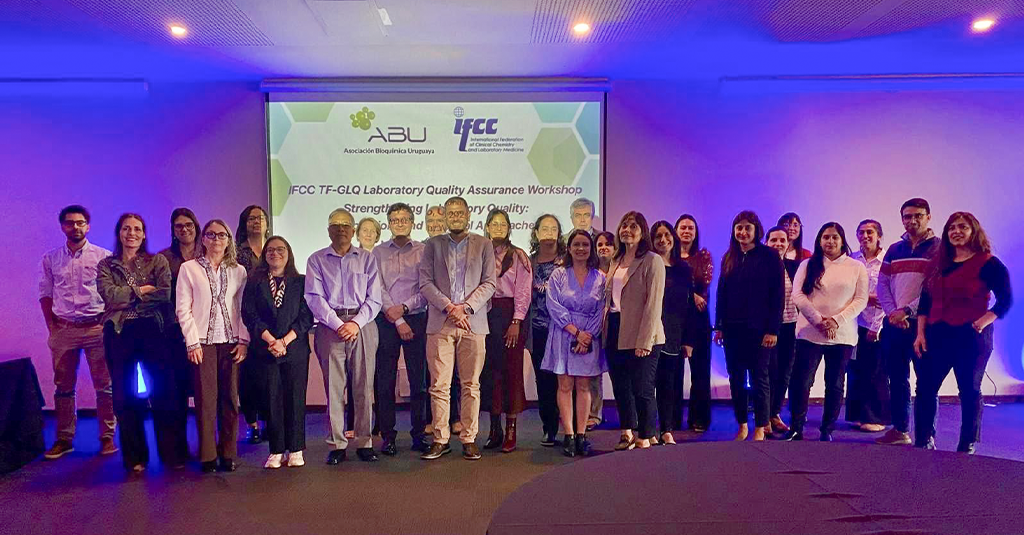
The recent meeting promoted by the IFCC – International Federation of Clinical Chemistry and Laboratory Medicine – and its Task Force on Global Laboratory Quality (TF-GLQ) in Montevideo brought together specialists and professionals to discuss practical pathways to laboratory quality. The discussions addressed management, internal quality control, external quality assessment, and indicators, always with a focus on the practical application of these concepts in daily laboratory operations.
More than presenting technical recommendations, the event underscored a central point: international standards gain meaning when they engage with the local context. Laboratories in different countries face similar challenges, such as properly interpreting analytical performance, standardizing processes, and transforming data into improvement actions.
Quality as a Daily Commitment
One of the most recurring messages was that quality is not sustained solely by documents or regulatory requirements. It depends on continuous team learning and the consistent use of tools that support safe decision-making. Internal quality control and external quality assessment programs were highlighted as allies in identifying opportunities and reducing uncertainty.
Bridges Between the Global and the Local
The meeting featured high-level presentations delivered by three members of the TF-GLQ: Dr. Ivan Blasutig, Prof. Qing Meng, and Dr. José Poloni, Educational Manager at Controllab, along with two highly respected local representatives: Q.F., B.C. Beatriz Varela and Q.F., B.C. Ana Piana.
The combined expertise of these professionals provided participants with valuable insights into international standards and best practices, as well as approaches adapted to the Uruguayan context. This integration of global and local perspectives enriched the discussions and ensured that the content was both relevant and applicable to everyday laboratory activities.
What Laboratories Take into Practice
The key takeaway from the meeting was straightforward: quality is a living process. It is strengthened by the effective use of indicators, participation in comparative programs, and investment in people. By connecting global trends to daily practice, the sector enhances the reliability of results and the quality of patient care.
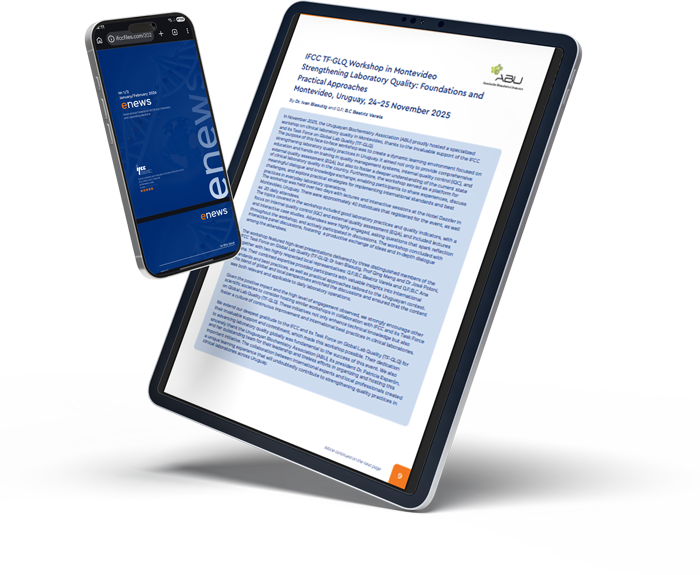
More details about the initiative are available in issue № 1/2 – January/February 2026 eNews, da International Federation of Clinical Chemistry and Laboratory Medicine.