
Best practices in integrated Blood Gas Analysis

Best practices in integrated Blood Gas Analysis

The Online Meeting was conducted by Dr. Carlos Eduardo dos Santos Ferreira, clinical pathologist, with a master’s and PhD in Medicine, Medical Manager at Einstein Hospital Israelita, Coordinator at the Laboratório Central da Escola Paulista de Medicina/Hospital de São Paulo, and Director of Accreditation and Quality at SBPC/ML.

The session covered the pre-analytical, analytical and post-analytical aspects of blood gas, electrolyte and metabolite testing, integrated with acid-base evaluation, as well as clinical and laboratory considerations.

With up-to-date content, the training provided a comprehensive overview of integrated blood gas analysis — from proper indication and collection of venous and arterial samples to transportation, storage, processing, quality control, and interpretation of results.

Questions & Answers

The following questions were not addressed during the Online Meeting.

Regarding harmonization/comparability between blood gas analyzers, could you indicate how to perform it considering the sample has time and air exposure limitations?

Process the samples quickly (within 30 minutes of collection) across the analyzers and evaluate the results, ensuring that routine sample syringes are not exposed to air. One option is to use external control samples for each analyzer as a measure of comparability.

Same as the answer above.

At least once a year, while it is necessary to check whether accrediting institutions have modified the requirements.

They are receiving oxygen via mask or catheter.

No, they assess different aspects.

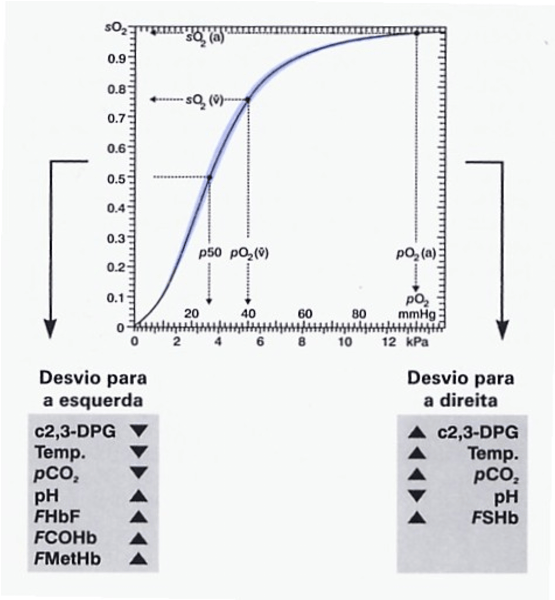
Correct values according to the sample temperature, as is done for atmospheric pressure correction (entered into the analyzer). Analyzers are standardized to 37 °C. In cases of hyperthermia or hypothermia, measured values of partial oxygen pressure, CO₂, and pH may not accurately reflect the in vivo physiological state, leading to incorrect clinical interpretations if not adjusted. For example, oxygen affinity decreases as temperature increases. Table below: oxygen dissociation curve.

Yes. For venous blood samples. Use a heparin tube. Place it in the correct tube sequence. Closed system. Each collection system must be evaluated to determine whether it allows the use of a syringe with balanced heparin. Arterial blood—collected separately from an arterial site.

You may suspect it by evaluating clinical correlation. Evaluating only in the laboratory, it is not possible. Or values that require a new sample? Only with the laboratory, it is not possible.

  • Dr. Carlos Eduardo dos Santos Ferreira

    Clinical pathologist, with a master’s and PhD in Medicine, Medical Manager at Einstein Hospital Israelita, Coordinator at the Laboratório Central da Escola Paulista de Medicina/Hospital de São Paulo, and Director of Accreditation and Quality at SBPC/ML.

  • Dr. José Antônio Tesser Poloni

    Pharmacist-biochemist graduated from PUCRS, with a master’s and PhD in Health Sciences from UFCSPA, Educational Manager and Consultant for Urinalysis at Controllab.

Other Meetings

Inflammation in Gynecologic Cytology: How to Recognize Reactive Changes and Avoid Diagnostic Pitfalls in the Pap Test
The Phantom Threat: Phytobacter and the Crisis of Laboratory Identification
Paraproteinemias and Monoclonal Gammopathies: A Practical Laboratory Approach
plugins premium WordPress
X
We use cookies and other similar technologies to improve your experience, enabling a more personalized navigation, according to the characteristics and your interest. For more information see our Privacy and Security Policy.

PRM 0009

Certified Reference Material Producer

Accredited by Coordenação-Geral de Acreditação do Inmetro

Controllab has been accredited as a Certified Reference Material (CRM) Producer since 2016 by Cgcre, under number PMR 0009. The conformity assessment is carried out in accordance with the requirements established in ABNT NBR ISO 17034 and Inmetro standards, ensuring competence for the production of CRMs, as defined in the Scope of Accreditation.

This accreditation attests to Controllab’s technical competence in producing CRMs according to international requirements and enables it to be recognized in other countries, under mutual recognition agreements, thereby reducing technical barriers between Brazil and other countries across continents.

Materiais de Referência Certificados - PMR 0009 - ABNT NBR ISO 17034-Controllab
Cgcre is signatory to the Mutual Recognition Arrangements of the International Laboratory Accreditation Cooperation (ILAC) and Interamerican Accreditation Cooperation (IAAC).

CAL 0214

Calibration Laboratory

Accredited by Coordenação-Geral de Acreditação do Inmetro

In December 2002, the Calibration Laboratory was accredited by Cgcre. With this recognition, it became part of the Brazilian network of accredited laboratories, under number 214. Since then, it has been periodically evaluated for the maintenance and/or extension of its accreditation.

The Inmetro seal attests to Controllab’s technical competence, credibility, and operational capability for calibration services, in accordance with the requirements of ABNT NBR ISO/IEC 17025.

Calibração de Instrumentos - CAL 0214 - ABNT NBR ISO/IEC 17025 - Controllab
Cgcre is signatory to the Mutual Recognition Arrangements of the International Laboratory Accreditation Cooperation (ILAC) and Interamerican Accreditation Cooperation (IAAC).

PEP 0003

Proficiency Test Provider

Accredited by Coordenação-Geral de Acreditação do Inmetro

In September 2011, Controllab was accredited by Cgcre as a proficiency test provider, under nº PEP0003. Initially as part of a pilot project by Inmetro, this accreditation was based on ILAC G13: 2007 and included several clinical and hemotherapy tests. In the periodic evaluations of this accreditation, new segments and tests are included and the evaluation is now conducted according to ABNT NBR ISO/IEC 17043.

This accreditation attests to Controllab’s technical competence to develop and conduct proficiency tests in accordance with international requirements and enables it to be recognized in other countries, in accordance with mutual recognition agreements signed by Brazil in Mercosur, the Americas and Europe.

PEP 0003 - ABNT NBR ISO-IEC 17043 - Controllab

Cgcre is signatory to the Mutual Recognition Arrangements of the International Laboratory Accreditation Cooperation (ILAC) and Interamerican Accreditation Cooperation (IAAC).