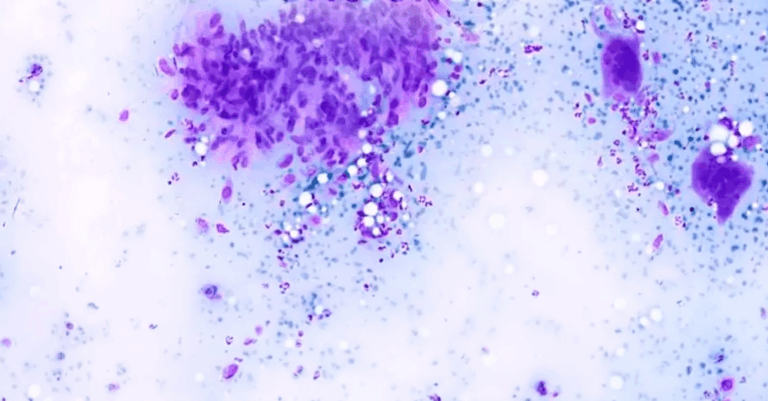

Identification and interpretation of urine crystals in animals

Identification and interpretation of urine crystals in animals

The meeting was led by Dr. Regina Kiomi Takahira, a veterinarian graduated from the School of Veterinary Medicine and Animal Science at the University of São Paulo (FMVZ-USP), with residency, master’s, and doctoral degrees from the São Paulo State University “Júlio de Mesquita Filho” (FMVZ-Unesp) – Botucatu, where she is a Full Professor. She also serves as Vice President of the Brazilian Association of Veterinary Clinical Pathology (ABPCV).

The presentation covered breed and species-specific predispositions, a key aspect for contextualizing laboratory findings. Breeds such as Dalmatians and Bulldogs, for example, have genetic characteristics that significantly alter their urine crystal profiles.

Additionally, the meeting emphasized the importance of clear and standardized technical communication among professionals involved in veterinary patient care, promoting consistency in reports and accuracy in clinical decision-making.

Questions & Answers

The following questions were not addressed during the Online Meeting.

First, it is important to ensure that the structures observed are indeed hemoglobin bodies and not other similar structures. The most appropriate method of confirmation is through fixation and staining of the sediment slide. Hemoglobin bodies exhibit color and texture similar to red blood cells but are smaller in size. They may appear alone or associated with red blood cells (hematuria). The description can be made qualitatively (simply noting their presence or absence) or quantitatively (indicating the presence of small, moderate, or large amounts of hemoglobin bodies, or using a plus system, such as rare hemoglobin bodies, +, ++, or +++, to be recorded in the observations section of the urinalysis report).

Yes. The urinary sediment evaluation protocol involves centrifuging a standardized volume of homogenized urine (usually 5 mL) and resuspending a fixed volume of sediment (0.5 mL) after discarding the supernatant. Centrifuging smaller volumes results in a lower concentration of formed elements (cells, casts, crystals, bacteria, and other structures) and, consequently, may lead to underestimation of the findings. On the other hand, smaller-volume samples are also more susceptible to pre-analytical factors, such as contamination from lower urinary or genital tract secretions, which can result in overestimation of leukocytes and bacteria, among other elements.

Hyaline casts can be observed in small amounts in the urine of healthy animals. Their formation may occur in situations of pre-glomerular proteinuria associated with increased filtration pressure, such as after intense physical activity. Other types of casts, however, are considered pathological and may be associated with tubular injury, among other alterations.

Bilirubin is a photosensitive molecule, unstable when exposed to visible light (especially ultraviolet light). Upon exposure, it undergoes photo-oxidative degradation, leading to the formation of colorless derivatives (biliverdin and other products). This degradation causes the bilirubin concentration to decrease artificially, resulting in falsely low or negative results. Studies show that bilirubin can undergo significant reductions within 30 minutes of light exposure, with a loss reaching 30–50% in 1 to 2 hours, depending on light intensity. For this reason, urine samples should be protected from light by wrapping the container in aluminum foil or storing the urine in amber tubes.


  • Dra. Regina Kiomi Takahira

    Veterinarian graduated from FMVZ-USP, with residency, master's, and doctoral degrees from FMVZ-Unesp – Botucatu. Full Professor at FMVZ-Unesp – Botucatu and Vice President of ABPCV.

  • Adriana Vieira

    Educational supervisor, technical services analyst at Controllab, and moderator of the meeting.

Other Meetings

Diagnostic investigation of hemoparasitosis in animals
Alterações morfológicas dos eritrócitos, inclusões citoplasmáticas e alterações patológicas envolvidas
Morphological alterations of erythrocytes, cytoplasmic inclusions, and associated pathological changes
Understanding the main pre-analytical points in the quality of my laboratory test
plugins premium WordPress
X
We use cookies and other similar technologies to improve your experience, enabling a more personalized navigation, according to the characteristics and your interest. For more information see our Privacy and Security Policy.

PRM 0009

Certified Reference Material Producer

Accredited by Coordenação-Geral de Acreditação do Inmetro

Controllab has been accredited as a Certified Reference Material (CRM) Producer since 2016 by Cgcre, under number PMR 0009. The conformity assessment is carried out in accordance with the requirements established in ABNT NBR ISO 17034 and Inmetro standards, ensuring competence for the production of CRMs, as defined in the Scope of Accreditation.

This accreditation attests to Controllab’s technical competence in producing CRMs according to international requirements and enables it to be recognized in other countries, under mutual recognition agreements, thereby reducing technical barriers between Brazil and other countries across continents.

Materiais de Referência Certificados - PMR 0009 - ABNT NBR ISO 17034-Controllab
Cgcre is signatory to the Mutual Recognition Arrangements of the International Laboratory Accreditation Cooperation (ILAC) and Interamerican Accreditation Cooperation (IAAC).

CAL 0214

Calibration Laboratory

Accredited by Coordenação-Geral de Acreditação do Inmetro

In December 2002, the Calibration Laboratory was accredited by Cgcre. With this recognition, it became part of the Brazilian network of accredited laboratories, under number 214. Since then, it has been periodically evaluated for the maintenance and/or extension of its accreditation.

The Inmetro seal attests to Controllab’s technical competence, credibility, and operational capability for calibration services, in accordance with the requirements of ABNT NBR ISO/IEC 17025.

Calibração de Instrumentos - CAL 0214 - ABNT NBR ISO/IEC 17025 - Controllab
Cgcre is signatory to the Mutual Recognition Arrangements of the International Laboratory Accreditation Cooperation (ILAC) and Interamerican Accreditation Cooperation (IAAC).

PEP 0003

Proficiency Test Provider

Accredited by Coordenação-Geral de Acreditação do Inmetro

In September 2011, Controllab was accredited by Cgcre as a proficiency test provider, under nº PEP0003. Initially as part of a pilot project by Inmetro, this accreditation was based on ILAC G13: 2007 and included several clinical and hemotherapy tests. In the periodic evaluations of this accreditation, new segments and tests are included and the evaluation is now conducted according to ABNT NBR ISO/IEC 17043.

This accreditation attests to Controllab’s technical competence to develop and conduct proficiency tests in accordance with international requirements and enables it to be recognized in other countries, in accordance with mutual recognition agreements signed by Brazil in Mercosur, the Americas and Europe.

PEP 0003 - ABNT NBR ISO-IEC 17043 - Controllab

Cgcre is signatory to the Mutual Recognition Arrangements of the International Laboratory Accreditation Cooperation (ILAC) and Interamerican Accreditation Cooperation (IAAC).